

Contact
E-mail: info@miranabraham.nl
Tel: 0031 (0) 617530209
Miran Abraham, a Kurdish novelist hailing from Sulaymaniyah, South Kurdistan, finds his artistic sanctuary in the serene landscapes of the Netherlands. Born on March 26, 1970, in the vibrant city of Sulaimani, Abraham’s journey is a testament to the profound influence of his Kurdish heritage and his deep-rooted connection to the human experience. In a revealing interview, Abraham unveils the intricate tapestry of his creative process, emphasizing the profound interplay between his personality and his craft. “For me, writing is an intimate dance with my emotions,” he confides. “Each word I pen is a reflection of my life experiences, the very essence of my existence woven into the fabric of my narratives.”
Since childhood, Abraham has been enraptured by the rich tapestry of morality woven by his family and the diverse spectrum of life around him. His keen observation extends beyond human interactions to encompass the intricate nuances of the animal kingdom, each encounter serving as fodder for his reflective prose. A polymath in his own right, Abraham’s artistic pursuits extend far beyond the realm of literature. Drawing inspiration from the realms of painting, theatre, and music, he immerses himself in a continuous dialogue with various art forms. “I am an avid consumer of art,” he admits, his eyes alight with passion. “Whether it be the strokes of a masterful painting, the emotive strains of a symphony, or the raw emotion captured on stage, I find solace and inspiration in the world of art.” Amidst the hustle and bustle of life, Abraham often seeks respite in the tactile realm of sculpture, his skilled hands breathing life into blocks of wood. It is in these moments of creation, away from the ceaseless clamor of existence, that he finds sanctuary and renewal, each stroke of the chisel a cathartic release from the rigors of his craft.
Through his distinct narrative lens, Miran Abraham eschews ambiguity and complexity, opting instead to depict life in its raw authenticity, devoid of embellishment or idealism. His literary ethos is anchored in realism, a commitment to portraying existence as it truly is, unadorned by the trappings of imagination or illusion.
In Abraham’s historical narratives, a palpable sense of verisimilitude permeates every page, transporting readers to pivotal moments in the annals of time. His meticulous attention to detail ensures that the social dynamics, traditions, and ethos of bygone eras are rendered with striking fidelity, mirroring the historical reality of the period. Central to Abraham’s narrative tapestry are the characters—historical figures imbued with palpable humanity and depth. Through their stories, Abraham offers readers a window into the collective psyche of society, illuminating the profound interplay between individual lives and the sweeping currents of history. Yet, amidst the backdrop of momentous events, Abraham eschews the temptation to cast his characters as archetypal heroes. Instead, he imbues them with a nuanced humanity, portraying them not as larger-than-life figures, but as ordinary individuals navigating the complexities of their time. In essence, Abraham’s narrative style is a testament to the art of storytelling—a seamless blend of historical accuracy and artistic expression. Through his evocative prose, he invites readers to immerse themselves in a world where the past comes alive, offering both enjoyment and introspection, while reaffirming the intrinsic connection between narrative and identity.
Certainly, let’s refine the descriptions for each work:
The Nightwalker (Roman, 2015)
Sara’s Homeland (Roman, 2019)
Mastura’s Grief (Roman, 2020)
Monastery of the Scholar (Roman, 2023)
Manuscript Day (Short stories, 2021)
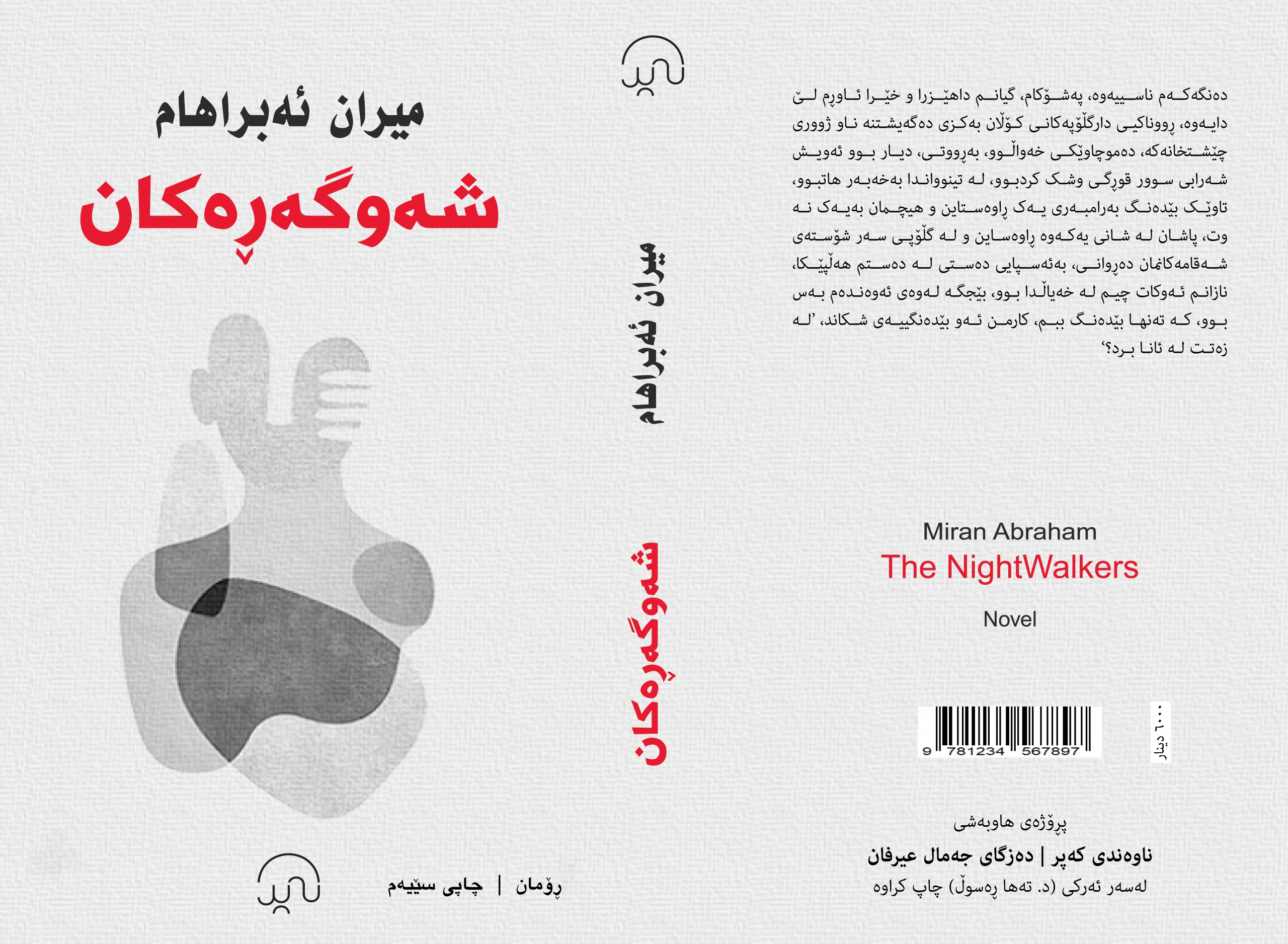
Title: The Nightwalker
Author: Miran Abraham
Publication Year: 2015
Location: Sulaimani
“The Nightwalker,” a groundbreaking work in Kurdish literature, marks Miran Abraham’s debut into the realm of storytelling. Published in 2015 in Sulaimani, this novel stands as a testament to the author’s prowess in weaving intricate narratives that transcend cultural and linguistic boundaries.
At the heart of “The Nightwalker” lies a vivid tapestry of portrait sketches, each imbued with abstract artistry that captivates the imagination. Through a masterful interplay of color, line, and shape, Abraham breathes life into his characters, transforming them into vessels for the telling of profound life stories. Central to the narrative is Martin Salamo, both protagonist and narrator, whose introspective journey unveils the subtle nuances of human experience. As Martin navigates the intricacies of artistry and perception, readers are drawn into a world where the mundane is elevated to the extraordinary.
A recurring motif throughout the novel is Martin’s disdain for conventional decoration, his belief that sensory overload detracts from the essence of human connection. This sentiment sets the stage for a series of unexpected encounters and revelations, guiding readers on a journey of self-discovery and enlightenment. At its core, “The Nightwalker” is a relentless quest for the mysteries of existence. From the opening pages to its gripping conclusion, the novel beckons readers to contemplate the profound interconnectedness of life and the enduring search for meaning.
Through Martin and his fellow nightwalkers, Abraham invites readers to explore the depths of human longing and nostalgia, where memories of home and youth serve as guiding beacons in an ever-changing world. In this captivating tale, the boundaries between reality and imagination blur, leaving readers enthralled by the enigmatic beauty of the human experience.
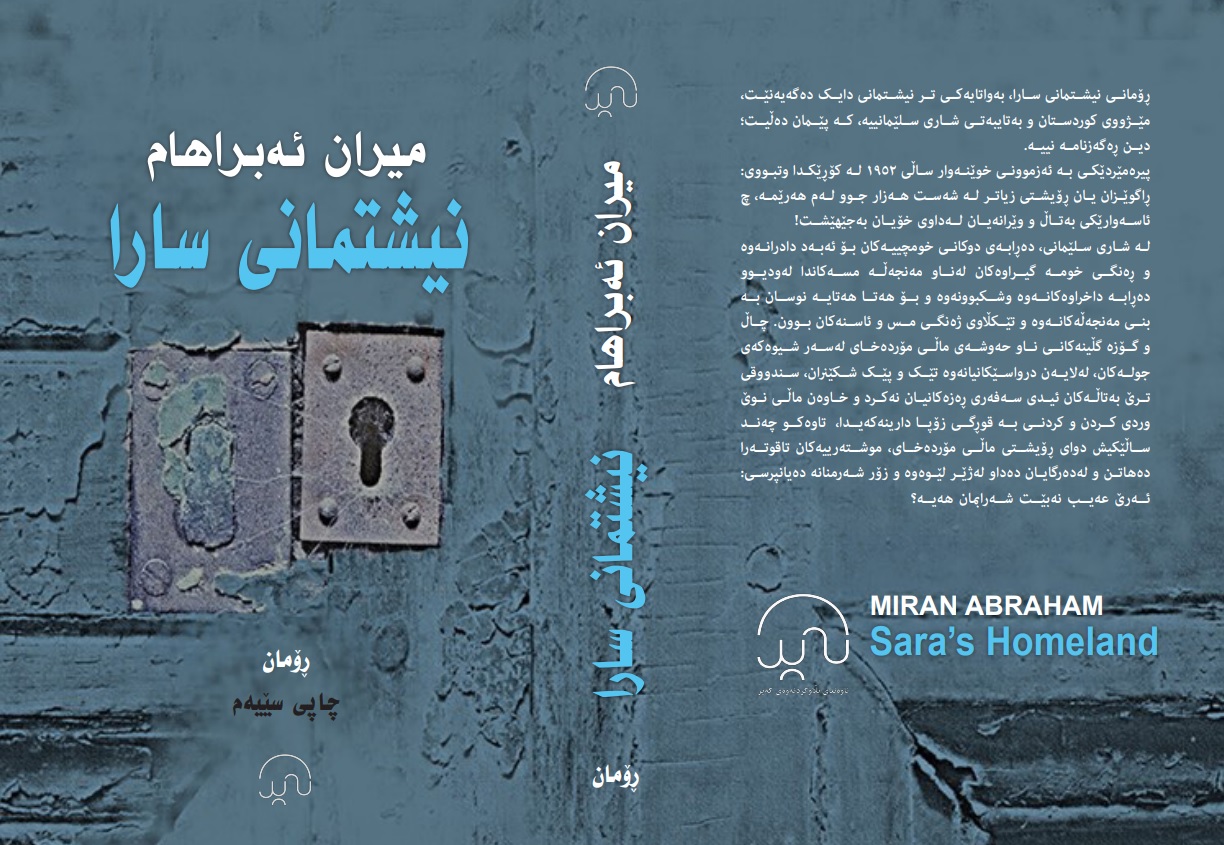 Title: Sara’s Homeland
Author: Miran Abraham
Publication Year: 2019
Location: Sulaimani
“Sara’s Homeland,” penned by the acclaimed Miran Abraham and published in 2019 in Sulaimani, stands as a beacon of literary excellence in South Kurdistan. This seminal work has garnered widespread acclaim, earning its place as one of the best-selling novels in Kurdish libraries.
At its core, “Sara’s Homeland” is a poignant exploration of identity, belonging, and unwavering commitment to one’s homeland. Through a compelling narrative tapestry, Abraham delves into the forgotten annals of history, shining a spotlight on the lives of numerous influential figures who shaped the destiny of the Middle East, particularly Iraq. Central to the novel’s thematic arc is the struggle against British colonialism and Arab hegemony, as well as the pervasive influence of chauvinism in the post-World War II era. Against this tumultuous backdrop, Abraham weaves a narrative that transcends individual stories, encompassing the collective experiences of a nation striving for autonomy and self-determination.
Through the voices of iconic figures such as Chaim Shlomo, Karimi Alaka, Priest Yousef Peri, and many others, “Sara’s Homeland” offers readers a multifaceted portrait of a nation’s tumultuous journey through the sands of time. These historical luminaries, portrayed with nuance and depth, serve as conduits for the retelling of a century-spanning saga, free from the shackles of ideological bias. Indeed, “Sara’s Homeland” serves as a powerful mirror reflecting the tumultuous events that have shaped Iraq, particularly Kurdistan, throughout history. Abraham’s narrative prowess breathes life into the streets of yesteryears, capturing the essence of bygone eras with vivid clarity.
In this evocative novel, Abraham invites readers to bear witness to the enduring spirit of resilience and defiance that has defined the Kurdish people for generations. Through meticulous research and a keen eye for detail, he resurrects the past, allowing readers to traverse the corridors of time and reclaim a piece of their collective heritage.
Title: Mastura’s Grief
Author: Miran Abraham
Publication Year: 2021
Location: Sulaimani
“Mastura’s Grief,” penned by the illustrious Miran Abraham and published in 2021 in Sulaimani, emerges as a poignant testament to the harrowing realities of the Anfal genocide. Through a lens of stark realism, this historical narrative unveils the heart-wrenching tale of a solitary woman ensnared by the atrocities of war.
At its core, “Mastura’s Grief” serves as a visceral reminder of the human cost of conflict, transcending cultural and ethnic boundaries to underscore the universal anguish wrought by injustice and oppression. Through the eyes of its eponymous protagonist, the novel bears witness to the indelible scars left upon a nation’s collective psyche. Set against the backdrop of the Anfal campaign of 1988, the narrative unfolds in the rugged terrain of the Shuan area, where the tranquility of rural life is shattered by the brutal onslaught of government forces. From the decimation of entire villages like Darquta to the searing memories of atrocities witnessed firsthand, Abraham paints a vivid portrait of anguish and despair.
As Mastura’s recollections guide readers through the labyrinthine corridors of her past, the narrative traverses through the tumultuous events that followed—from the chaos of Erbil in the aftermath of the Anfal campaign to the fervor of the 1991 uprising. Against this tumultuous backdrop, Abraham deftly explores the lives of ordinary individuals caught in the crossfire, particularly those residing in the Iskan neighborhoods. Through meticulous attention to detail and a profound empathy for his characters, Abraham breathes life into the streets of Sarqalat, Arab, Saydawa, and Komari, capturing the essence of a community ravaged by tragedy yet resilient in spirit.
Ultimately, “Mastura’s Grief” stands as a testament to the enduring power of the human spirit in the face of unspeakable adversity. Through its raw authenticity and unflinching portrayal of historical trauma, the novel compels readers to bear witness to the untold stories of those who have suffered and to honor their memory with unwavering compassion and empathy.
Title: Monastery of the Scholar
Author: Miran Abraham
Publication Year: 2023
Location: Sulaimani
“Monastery of the Scholar,” serves as a compelling exploration of a pivotal historical period in Kurdistan, particularly Sulaimani. Spanning from 1935 to the aftermath of the 1993 uprising, this novel stands as a meticulous excavation and comparison of the tumultuous decades that shaped the region’s destiny.
At its core, ‘Monastery of the Scholar’ epitomizes the principles of realism, offering readers a vivid portrayal of the social conditions and traditions that defined the era. Through a masterful blend of artistry and realism, Ibrahim transports readers back in time, immersing them in the historical reality of Kurdistan’s past. Central to the narrative are the characters—historical figures whose lives intertwine with the fabric of society, leaving an indelible mark on the collective consciousness. Abraham’s deft characterization breathes life into these individuals, offering readers a window into their triumphs, tribulations, and enduring legacies.
Indeed, ‘Monastery of the Scholar’ stands as a testament to Ibrahim’s commitment to reshaping history in an artistic form, eschewing the glorification of heroes in favor of portraying individuals as they truly were. Through this nuanced approach, the novel emerges as a captivating source of narrative enjoyment, inviting readers to reflect on the complexities of human nature and society. As the fourth novel in Abraham’s illustrious repertoire, ‘Monastery of the Scholar’ continues to explore the themes of identity and place that have become synonymous with the author’s work. Building upon the foundation laid by previous works such as ‘Sara’s Homeland,’ Abraham confronts the pressing issues facing the Kurdish nation with unflinching honesty and unwavering conviction.
In essence, ‘Monastery of the Scholar’ serves as a beacon of cultural and literary excellence, offering readers a profound glimpse into the soul of Kurdistan and the enduring resilience of its people. Through Abraham’s evocative prose, readers are transported on a journey through time, bearing witness to the triumphs and tribulations that have shaped the region’s destiny.”
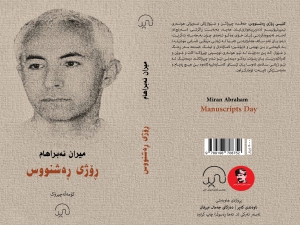
Title: Manuscript Day (Short stories)
Author: Miran Abraham
Publication Year: 2021
Location: Sulaimani
“Manuscript Day” offers a collection of short stories that captivate the imagination with their brevity and depth. Written in Kurdish, these tales transport readers across diverse landscapes of emotion and experience, each narrative a testament to the power of storytelling in its purest form.